
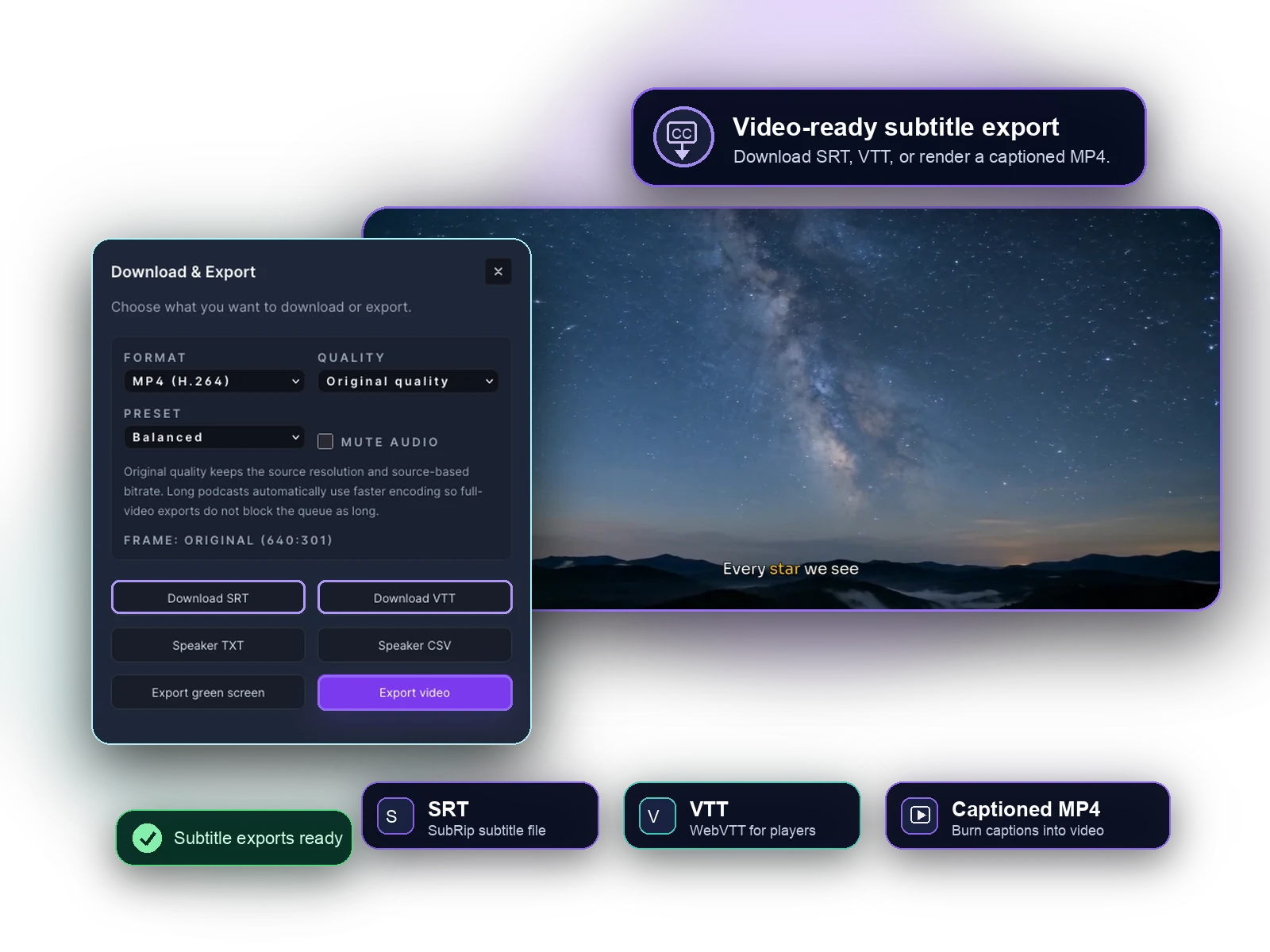
The short difference
SRT is a widely supported caption format built around numbered subtitle blocks and comma-based timestamps. VTT is a web-focused caption format that starts with a WEBVTT header and uses dot-based timestamps.
For most creators, the important question is not which format is better. The important question is which format the next destination accepts.
When SRT is a better fit
SRT is a safe default for many upload workflows because it is familiar, simple and broadly accepted. Use it when a platform, client or archive specifically requests SRT.
- Platform uploads that list SRT as the supported subtitle format.
- Simple caption delivery where styling is not part of the file.
- Backups for reviewed subtitle text and timing.
When VTT is a better fit
VTT is usually the better choice for HTML5 and web player workflows. It is designed for web captions, so it fits sites, training libraries and internal video players that load external text tracks.
- Browser video players.
- Course pages and training libraries.
- Web archives where captions are loaded as separate track files.
Why review timing before converting
A converter can change syntax from SRT to VTT, but it cannot tell you whether the captions still match the video. When timing matters, import the subtitle file with the video, review it, and export the format you need after the captions are checked.
Practical format examples
Use SRT when a client asks for a simple upload file or when a video platform lists SRT as the expected caption format. Use VTT when captions will load in a browser player, internal knowledge base, course page or web archive.
- YouTube upload: SRT is often the safest handoff.
- HTML5 video page: VTT is usually the better web track.
- Mixed delivery: export both after reviewing the same subtitle project.